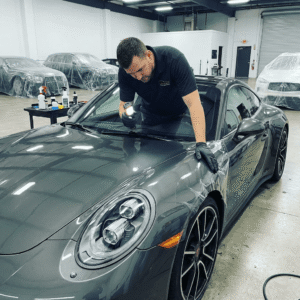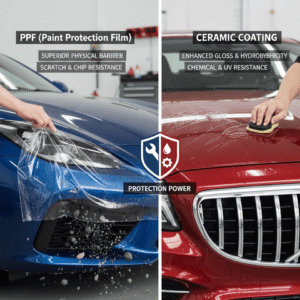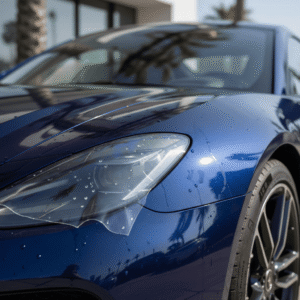
You love the idea of protecting your car’s paint, but you worry that applying a film will dull its shine. You want that deep, liquid-gloss look, but you also want the unbeatable protection of PPF.
To achieve a deep-gloss finish1, the process is twofold. First, the paint underneath must be perfected through deep cleaning and machine polishing2 before the film is applied. Second, the film must be maintained with pH-neutral soap3 and a quality sealant after installation.
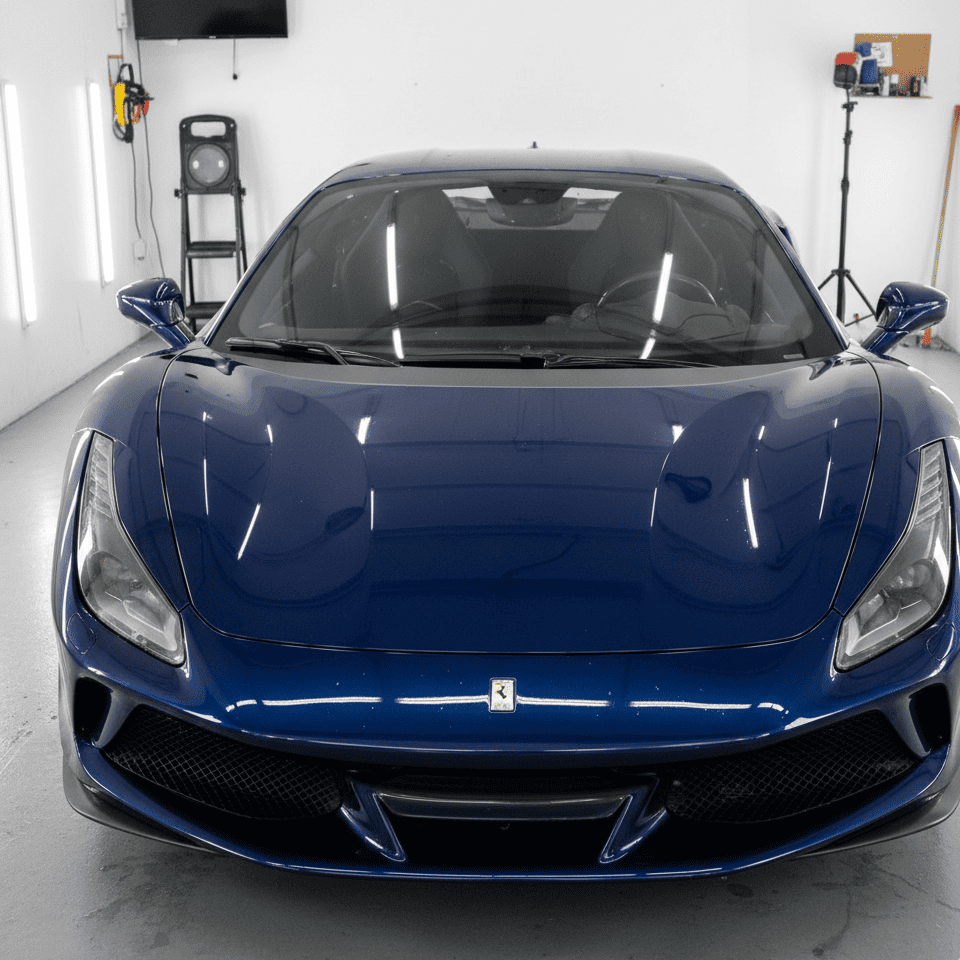
As a film manufacturer, I can tell you that our premium TPU films4 are designed with optical clarity5 that is virtually invisible. The film itself doesn’t create the gloss; it protects and enhances the gloss of the surface underneath it. Think of it like putting a perfectly clear screen protector on your phone. If the screen is already scratched, the protector won’t hide it. But if the screen is flawless, the protector will keep it that way. The exact same principle applies to achieving that jaw-dropping, mirror-like finish with PPF. It all starts with the canvas you’re applying it to.
What Does "Perfecting the Paint" Involve Before Applying PPF?
You’ve washed your car, so it looks clean and ready for film. But you can still see fine swirl marks6 and tiny scratches in the sunlight, and you’re not sure if the film will hide them or make them worse.
Perfecting the paint is a meticulous process of decontamination and machine polishing2. This removes all embedded dirt, swirl marks, and scratches to create a truly flawless surface. The film will lock in this perfection, so this step is non-negotiable.
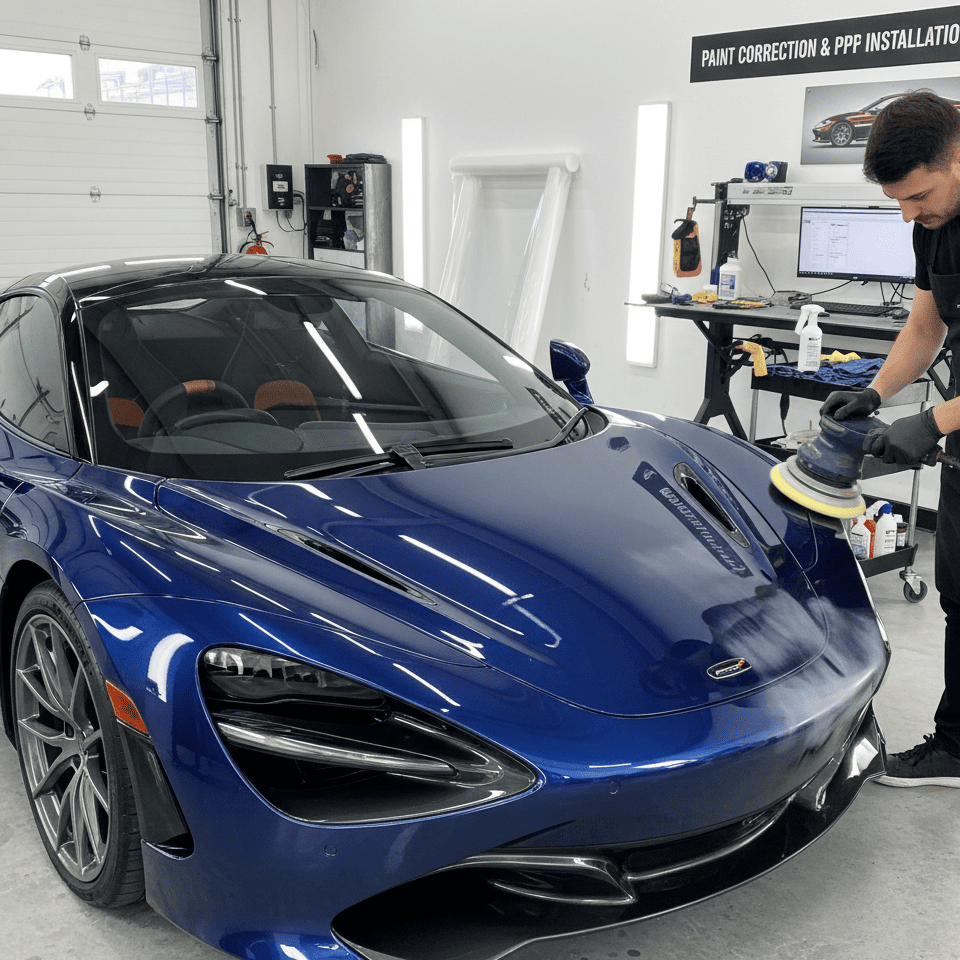
This is where true professional installers separate themselves from amateurs. I’ve seen it firsthand: a client brings in a brand new car, straight from the dealership, and assumes the paint is perfect. But under professional lighting, it’s covered in fine swirls from improper washing at the dealer. If you apply PPF over that, you are simply preserving those imperfections forever. The proper procedure is a multi-stage attack. First, a full decontamination wash to remove anything on the surface. Then, a clay bar treatment7 to pull out anything embedded in the paint. Finally, and most importantly, machine polishing2. This is where the magic happens. Using a series of compounds and polishes, a skilled technician physically levels the clear coat, removing all scratches and swirls until the surface is optically perfect. This creates that deep, wet-looking gloss that the PPF will then protect.
The Pre-PPF Paint Perfection Process
| Stage | Action | Purpose | Why It’s Crucial for Gloss |
|---|---|---|---|
| 1. Cleaning | pH-neutral wash and iron remover. | Removes all loose and chemical contaminants. | Provides a clean surface for the next stages, preventing new scratches. |
| 2. Decontamination | Clay bar treatment. | Physically pulls out embedded grit and grime. | Ensures the surface is glass-smooth, preventing bumps under the film. |
| 3. Correction | Machine Compounding & Polishing. | Levels the clear coat to remove swirls and scratches. | This is the step that creates the deep gloss. The film will enhance this corrected finish. |
How Do You Maintain That Deep Gloss After the Film Is Installed?
The PPF is installed and your car looks incredible. Now you’re worried about washing it. You don’t want to use the wrong products or techniques and end up scratching the film or dulling its finish.
To maintain the gloss, you must use a pH-neutral shampoo for regular washes and apply a high-quality wax8 or sealant specifically designed for PPF every few months. This adds a sacrificial layer9 that enhances shine and protects the film’s top coat.
[^10] to a car with PPF, buffing it to a high shine with a microfiber towel](https://shiyeppf.com/wp-content/uploads/2025/11/9733bf0a-0b5b-49b9-9f88-d710c1ce0f5a.png)
The top coat on our films is incredibly durable and has self-healing properties10, but it’s not invincible. Harsh chemicals and improper washing can still degrade the finish over time. I treat the PPF on my car just like I would treat perfect paint. I use the two-bucket wash method11 with a soft microfiber mitt and a pH-neutral car soap. This prevents scratching. About every three months, after a good wash, I apply a synthetic sealant. I find that modern sealants bond really well with the TPU top coat. This does two things: it fills in any microscopic pores in the film’s surface, making it even slicker and more hydrophobic, and it adds an extra layer of UV protection. This sacrificial layer9 takes the abuse from the environment, protecting the film itself and keeping that deep, wet shine looking its best. Think of it as sunscreen and moisturizer for your PPF.
Can You Polish Scratches Out of PPF?
You notice a light scuff or some fine swirl marks6 on your PPF, perhaps from a bad car wash. You want to fix it, but you’re afraid that polishing the film will damage it permanently.
Yes, you can polish light scratches out of high-quality PPF, but you must use a very fine, non-abrasive polish designed for this purpose. For deeper scuffs, the film’s self-healing properties10 can often be activated with gentle heat.
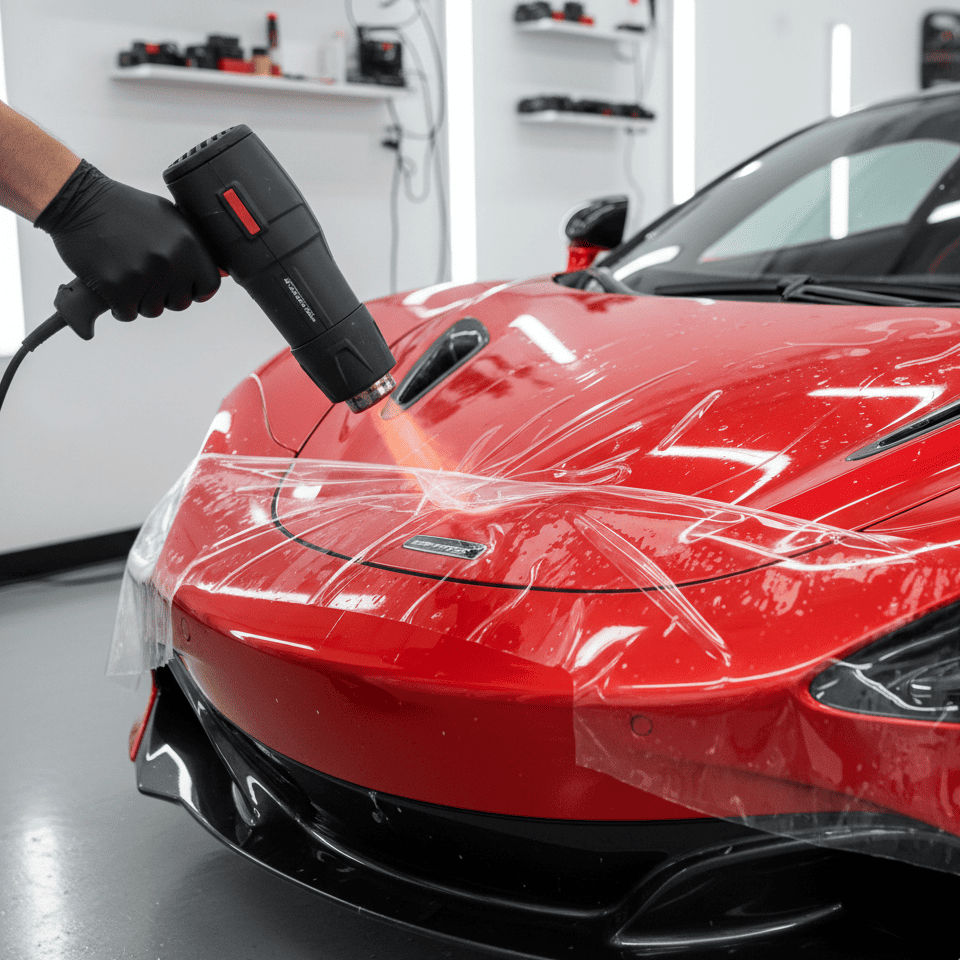
This is a huge advantage of our premium TPU films4. The top coat is designed to be self-healing. For most light scratches and swirl marks, parking the car in the sun for a few hours is often enough for the film’s surface to flow back to a smooth finish, making the marks disappear. You can speed this up by carefully pouring warm water (not boiling) over the area or using a heat gun on a low setting. For a more persistent but still light scratch, a very mild finishing polish can be used with a soft foam pad on a machine polisher at a low speed. It’s crucial to use a polish with no harsh abrasives. I’ve done this on my own car to remove a scuff from a branch. You just have to be gentle. The goal is to lightly clean and smooth the top coat, not to remove material like you would on paint. After polishing, always re-apply your favorite sealant to restore protection to that area.
Conclusion
Achieving a flawless, deep-gloss finish1 with PPF is a two-part process. It requires meticulous paint correction before installation and proper, gentle maintenance with quality sealants after installation to protect the shine.
-
Explore this link to understand the techniques and products that can help you achieve a stunning deep-gloss finish on your car. ↩ ↩
-
Discover how machine polishing can enhance your car’s paint and prepare it for protective films. ↩ ↩ ↩
-
Find out why using pH-neutral soap is crucial for maintaining your car’s finish and protecting PPF. ↩
-
Understand the advantages of TPU films in protecting your car’s paint while enhancing its appearance. ↩ ↩
-
Learn about the importance of optical clarity in PPF and how it affects the appearance of your car. ↩
-
Find effective methods to remove fine swirl marks and restore your car’s shine. ↩ ↩
-
Explore the benefits of clay bar treatment for achieving a smooth surface before applying PPF. ↩
-
Discover the best high-quality wax options to enhance and protect your PPF finish. ↩
-
Learn about sacrificial layers and how they protect your car’s finish from environmental damage. ↩ ↩
-
Understand the benefits of self-healing properties in PPF and how they can keep your car looking new. ↩ ↩
-
Learn about the two-bucket wash method and how it prevents scratches during car washing. ↩